

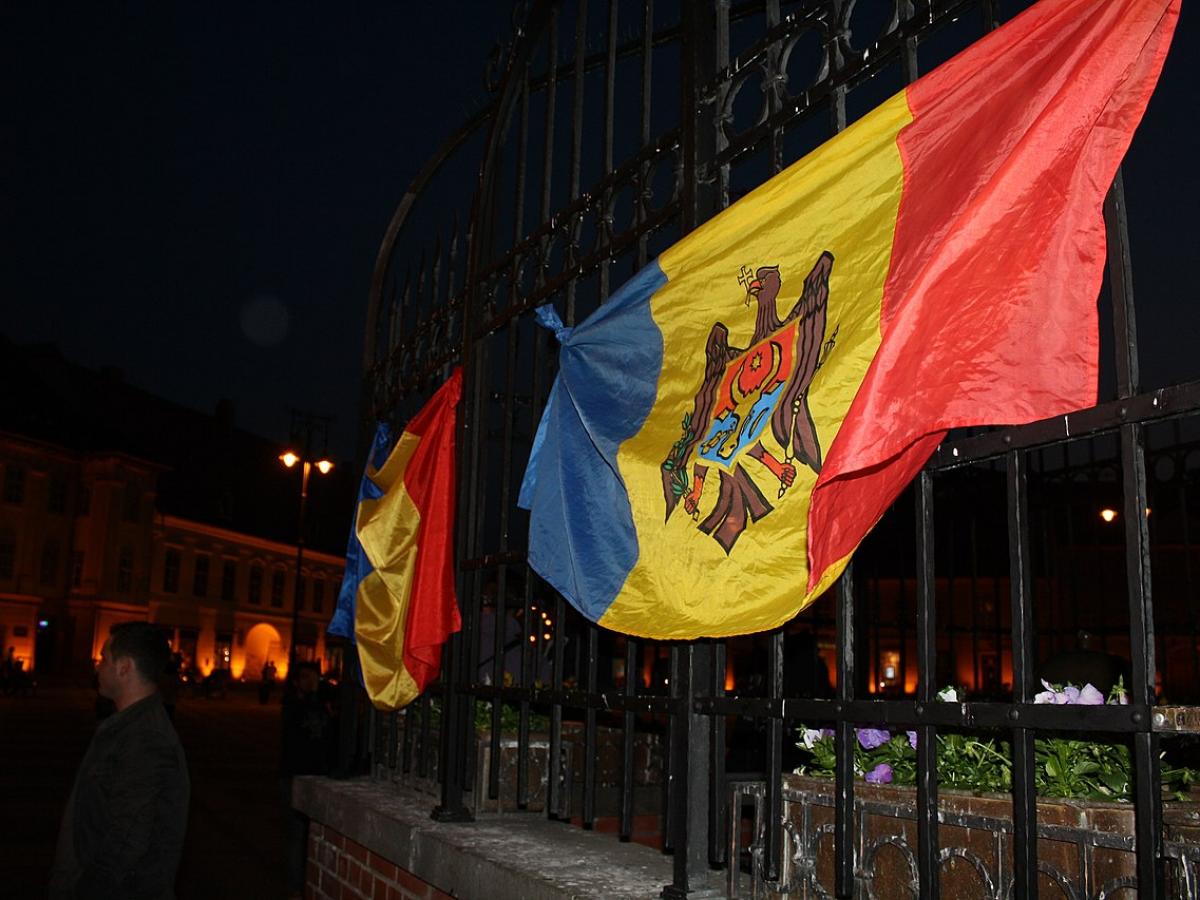
Moldova’s parliament has voted in favour of the country’s withdrawal from the Moscow-led Commonwealth of Independent States, CIS.
The voting took place on Friday after a heated debated and resulted in Chisinau’s final break with the union. Fifty-nine voted in favor, 17 against and 12 lawmakers abstained from voting.
Addressing the parliament, Foreign Minister Mihai Popșoi accused Russia of violating the principles on which the CIS was founded by waging a war of invasion against neighbouring Ukraine, committing acts of aggression against Georgia and what he described as “illegally” stationing troops in Moldova, with reference to the country’s Transnistria breakway region that hosts a 1,200-member Russian military contingent.
“Leaving the CIS is not an act of revenge, it is an act of liberation - the breaking of the last thread that keeps us anchored in a toxic, bitter past. It is a clear declaration: the Republic of Moldova is a sovereign, independent, and European state, not a piece on someone else’s chessboard,” Mihai Popșoi said.
“Today we stand at a crossroads, and this decision can no longer be postponed. For more than three decades, we have carried a heavy burden, an invisible chain that kept us tied to a past that no longer belongs to us,” Poposi said. He went on to portray the CIS as a body that emerged from the remnants of a collapsed empire and eventually evolved into an instrument for maintaining Moscow’s sway over surrounding nations.
Moldova has been ruled by pro-EU leader Maya Sandu who assumed office in December 2020. Sandu is a strong supporter of the country’s EU accession and has been critical of Moscow’s war in Ukraine.
Sandu’s pro-Western policies are criticized by the country’s pro-Kremlin opposition. Addressing the parliamentary hearing on Friday, opposition lawmakers hit back at the government’s decision to leave the CIS. “A large number of our citizens work in CIS countries. The CIS is not just Russia. Were there consultations with society and with our diaspora in CIS countries on this issue?” asked Diana Caraman, a lawmaker from the Party of Communists. Popșoi responded by pledging that “there will be no negative impact on bilateral relations with friendly states as a result of this step.”
Comments
Leave a Reply
Your email address will not be published. Required fields are marked *