

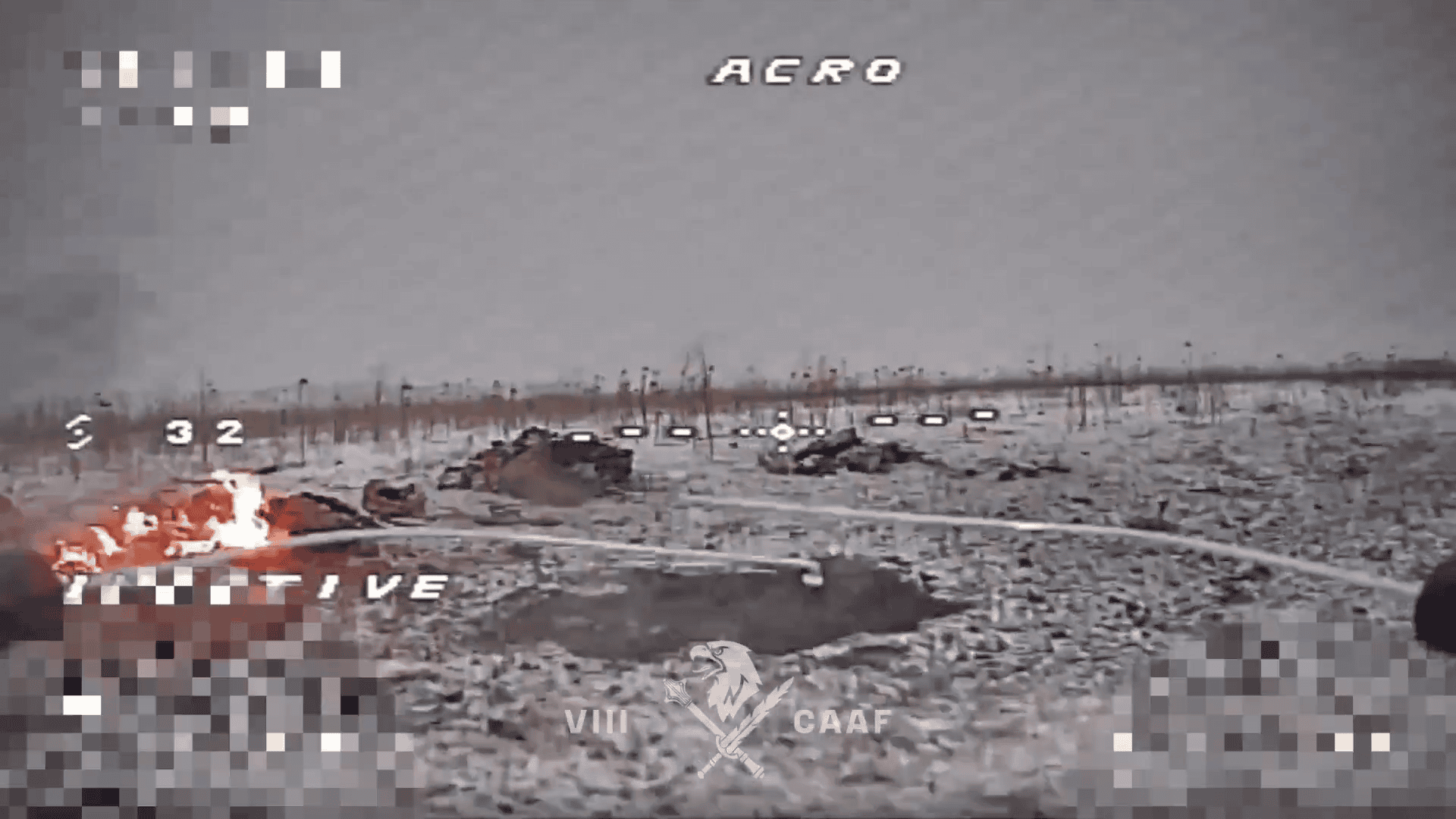
Twenty-nine Russian soldiers have been killed during an attempt to infiltrate the rare of Ukrainian lines through a gas pipeline, Ukrainian military sources reported on Tuesday.
The operation was carried out in Ukraine’s northern Sumy region by fighters from the 71st Separate Airmobile Brigade of Ukraine's Air Assault Forces. Posting on Telegram app, the brigade revealed that the Russian infiltration attempt was thwarted with the combined use of drones and artillery.
"Thanks to coordinated work by reconnaissance units, UAV crews and artillery, the enemy's movement was detected and stopped in time. All identified targets were destroyed – it appears the occupiers' real aim is 'self-demilitarisation,” the brigade posted.
The brigade added that this wasn't the first such attempt in the area, explaining that Russian troops had used the route before, despite heavy losses and the obvious risks.
Previously, Viktor Trehubov, who serves as the spokesperson for the Joint Forces grouping, reported that Russian forces had made gains in the vicinity of Myropilske in Sumy Oblast. At the same time, he noted that clashes are still ongoing around Marine, and emphasized that Russian troops have not yet advanced as far as Novodmytrivka.
Russian troops have at times used disused or damaged gas pipelines as an unconventional route for infiltration and movement behind front-line positions. Intelligence suggests that sections of it remained structurally intact, forming a narrow but continuous corridor stretching across contested territory. Under the cover of darkness, specialized units were deployed to exploit this hidden pathway, aiming to bypass heavily fortified surface defenses.
According to accounts of these kinds of operations, the troops moving through the pipeline face extremely harsh conditions. The confined space restricts movement, air quality, with visibility being essentially nonexistent, requiring navigation in near-total darkness. The passage also poses structural risks, with debris, deformation, and blocked segments slowing progress and forcing detours or pauses.

Comments
Leave a Reply
Your email address will not be published. Required fields are marked *